

Social Media Reputation Monitoring: A Buyer’s Guide for the Paranoid
Your Brand Is Being Talked About Right Now — Are You Listening?
Social media reputation monitoring is the practice of tracking what people say about your brand across social platforms, review sites, forums, news outlets, and beyond — so you can protect your image, respond fast, and catch threats before they spiral.
Here’s what it covers at a glance:
| What It Tracks | Why It Matters |
|---|---|
| Direct brand mentions | Know when customers praise or complain |
| Indirect mentions and hashtags | Catch conversations that skip your @handle |
| Fake accounts and impersonators | Stop scams before they damage customer trust |
| Sentiment shifts | Spot a brewing crisis before it goes viral |
| Reviews across platforms | Manage your reputation where buyers look first |
| Cybersecurity signals | Detect phishing links and breach chatter early |
Your customers are already talking. A dissatisfied customer can post, share, and go viral in minutes. And 73% of social media users expect a brand to respond within 24 hours — whether you were listening or not.
The stakes go beyond hurt feelings. 67% of consumers say they would lose trust in a company after a data breach — and many of those breaches start as social media threats: fake accounts, spoofed links, and scam posts that look just like you.
This guide cuts through the noise. It reviews the best tools available in May 2026, explains what features actually matter, and helps you choose the right fit — whether you’re a solo contractor or managing a multi-location brand.
I’m Josh Preece, founder of J&A Digital Solutions, with over 20 years of experience in web development, SEO, and digital marketing for local businesses. My work with local service companies has shown me how quickly an unmonitored online reputation can cost real leads — which is exactly why social media reputation monitoring has become a non-negotiable part of the strategies I recommend. Let’s break down exactly what to look for so you can make a confident, informed decision.
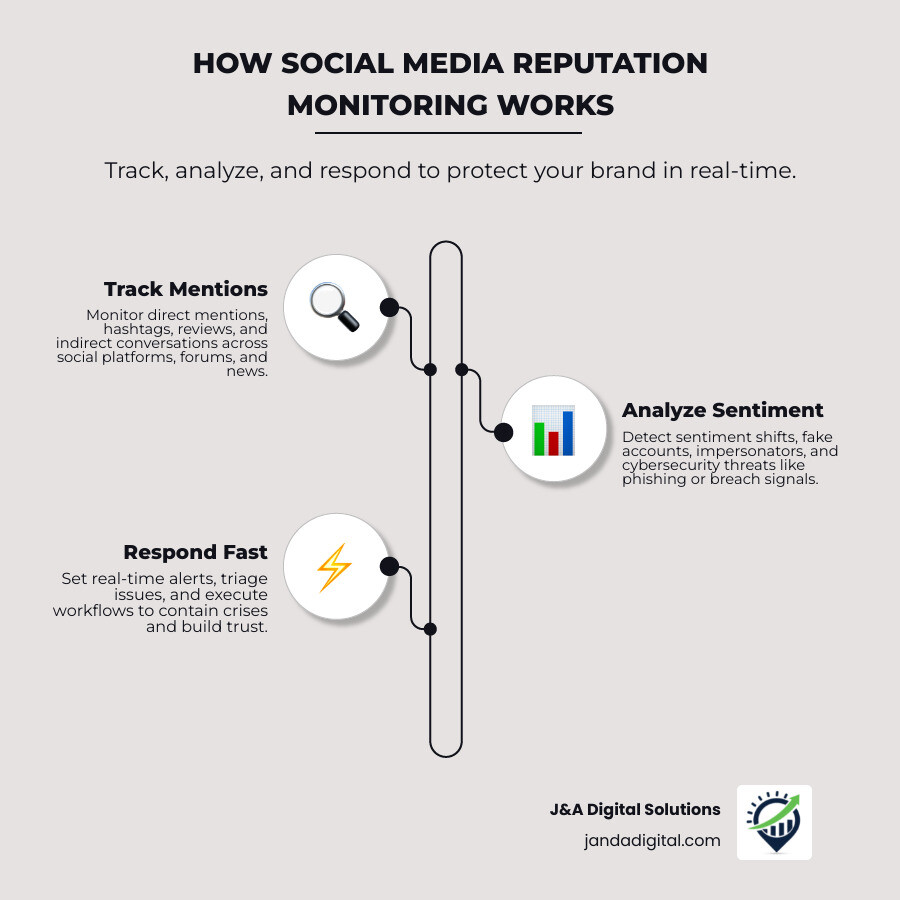
Simple guide to social media reputation monitoring terms:
What Social Media Reputation Monitoring Actually Means
At its simplest, social media reputation monitoring means watching the internet for signals about your brand before those signals turn into lost trust, lost leads, or a full-blown mess.
That includes tracking:
- Direct mentions of your business name
- Indirect mentions where people talk about you without tagging you
- Reviews on major platforms
- Comments in forums and community threads
- News stories and blog posts
- Videos, images, and sometimes even audio mentions
- Suspicious accounts pretending to be you
This is broader than just checking Instagram comments once a day and hoping for the best. A modern monitoring setup looks across social channels, review sites, web pages, and public conversations.
Social media reputation monitoring vs. social listening vs. response management
These terms get mashed together a lot, but they are not identical.
- Monitoring is detection. It tells us what is being said, where, and when.
- Listening is interpretation. It helps us understand trends, sentiment, recurring complaints, and market signals.
- Response management is action. It covers who replies, how fast, and what gets escalated.
Think of it like this:
- Monitoring says, “Someone posted about us.”
- Listening says, “People are getting frustrated about pricing and support delays.”
- Response management says, “Route this to customer support now, and have marketing pause scheduled posts.”
If you want a deeper look at tracking mentions specifically, this guide on brand mention tracking pairs well with this article. For a broader background on how brands analyze online conversations, social listening is a useful reference point.
Why social media reputation monitoring is now a business necessity
In 2026, reputation moves at internet speed. Customers do not separate your marketing, reviews, support, and security into neat little boxes. They just see your brand.
A few reasons this is now essential:
- 73% of social users expect brands to respond within 24 hours
- Digital word-of-mouth influences buying decisions before people ever call you
- Scam accounts and fake promos can damage trust even when you did nothing wrong
- A public complaint left unanswered often becomes a credibility problem, not just a service problem
- If a breach or security issue happens, 67% of consumers say trust drops
For local businesses in Columbus and Lancaster, this matters even more. If someone searches your business after seeing a complaint, fake listing, or scam post, they may never become a lead. Since we focus on helping businesses dominate near-me searches, we look at reputation as part of lead generation, not a side quest.
The risks of not monitoring your reputation
If you are not watching, you are guessing. And guessing is expensive.
Common risks include:
- Brand impersonation and fake profiles
- Phishing attempts using your name or logo
- Account takeover attempts
- Misinformation spreading unchecked
- Copyright misuse and unauthorized brand assets
- Angry customer posts sitting unanswered
- Viral backlash from a small issue that snowballs
The ugly truth is that many reputation problems start small. One fake account. One weird complaint pattern. One screenshot. One “is this legit?” comment. Ignore enough of those and suddenly everyone is forwarding your crisis in the group chat.
The Buyer’s Criteria: What to Look for in a Monitoring Tool
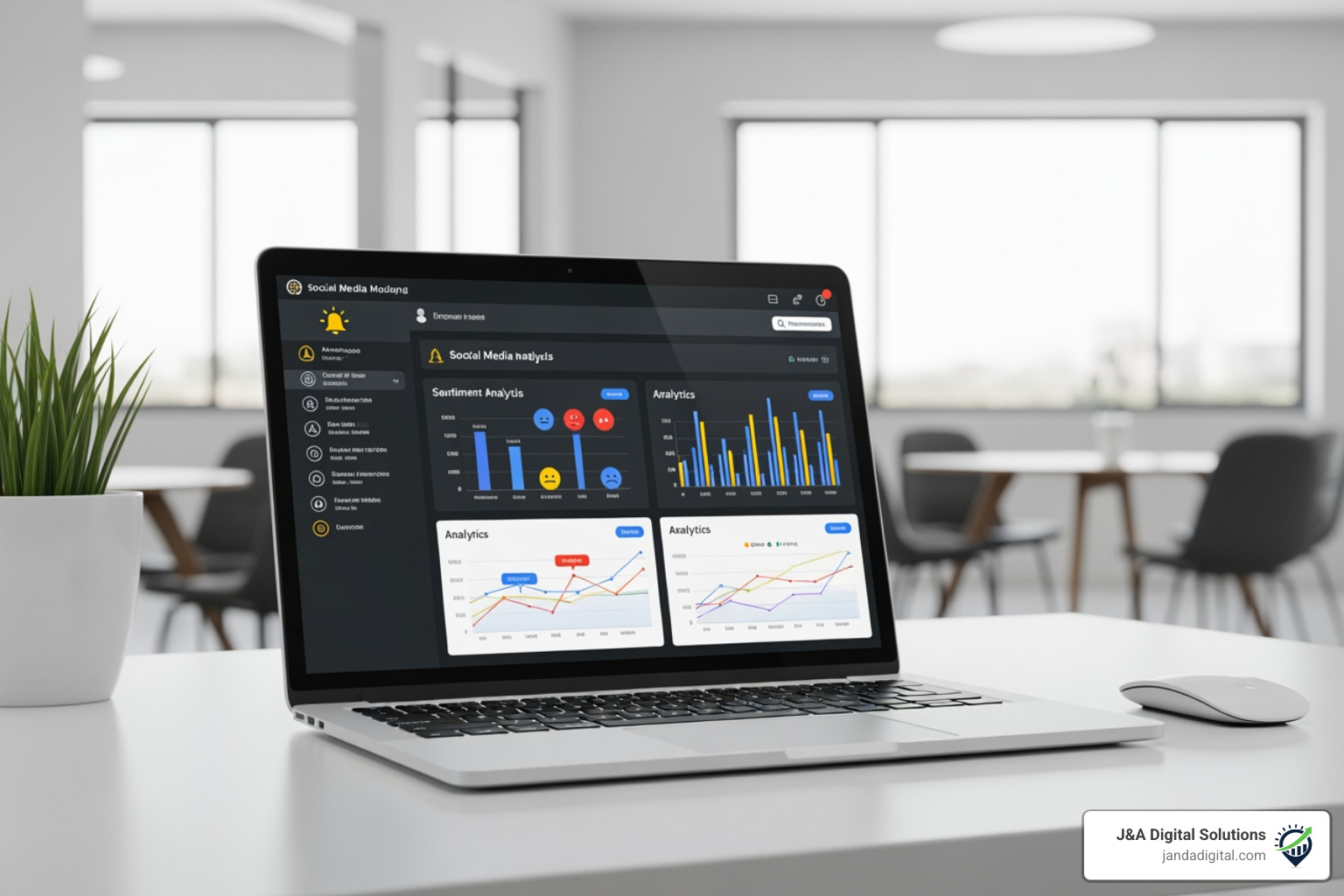
Not every tool is built for every business. Some are great for review monitoring. Some are stronger at AI-driven listening. Some are better for multi-location workflows. Some look impressive in demos and then bury useful features behind expensive upgrades. Classic software move.
Core features every social media reputation monitoring platform should include
At a minimum, a solid platform should give you:
- Real-time or near-real-time alerts
- Brand mention tracking across social and web sources
- Sentiment scoring
- Keyword and hashtag tracking
- Dashboards for trends and mention volume
- Reporting exports for your team or clients
- Historical data for trend analysis
- Filtering to reduce junk mentions
Some platforms also offer unusually broad source coverage, tracking social channels, news sites, blogs, forums, and web pages at large scale. Breadth matters when your audience talks about you outside the obvious platforms.
Advanced protection features for paranoid brands
If your biggest fear is impersonation, scams, or fast-moving PR disasters, basic mention tracking is not enough.
Look for:
- Detection of fake profiles and impersonators
- Anomaly or spike detection
- Image recognition for logos in photos
- Video and audio mention recognition
- Crisis alerts for sudden sentiment shifts
- Takedown or case-management workflows
- Role-based access controls
- Collaboration and escalation tools
This is where newer AI features become useful. Tools with visual listening can find your brand in memes, screenshots, videos, and reposted content, not just typed mentions.
How to choose the right fit for your business size and risk level
Here is the simple version:
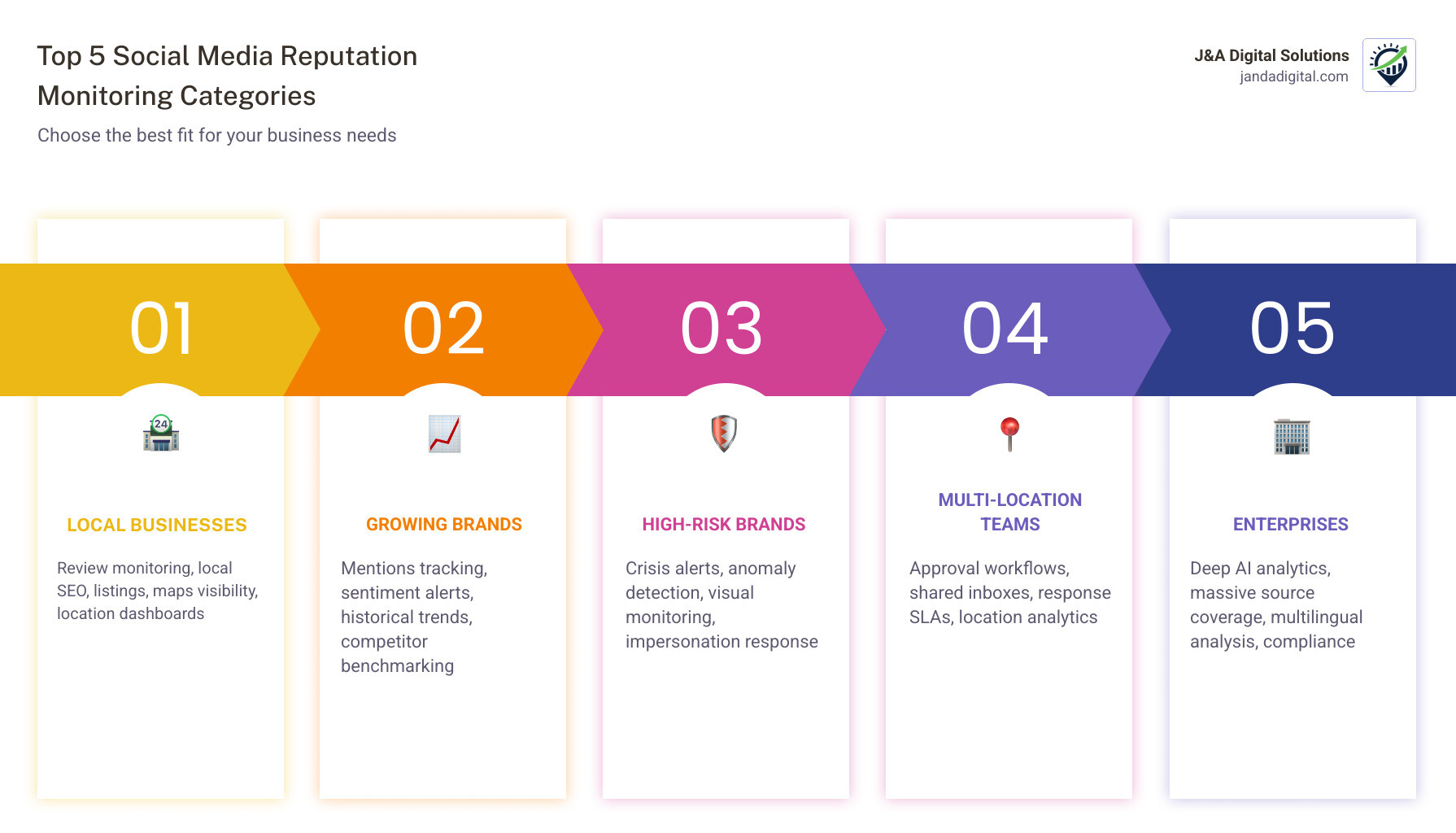
- Small local businesses need ease of use, review visibility, and clear alerts
- Growing brands need stronger sentiment analysis, trend tracking, and benchmarking
- High-risk brands need protection features, anomaly detection, and tighter escalation
- Multi-location teams need approval workflows, shared inboxes, and location reporting
- Enterprises need compliance, multilingual monitoring, and advanced dashboards
If you are a smaller business, avoid buying an enterprise monster you will never fully use. If you are a high-visibility brand, avoid cheap tools that notify you three business days after the fire started.
Red flags to avoid before you buy
Watch out for:
- Limited source coverage
- Delayed alerts
- Weak Boolean search or poor filtering
- Dashboards full of vanity metrics but little actionability
- Hidden fees for historical data or extra users
- Clunky onboarding
- No integrations with your current workflows
A tool that floods your inbox with noise is only marginally better than no tool at all.
How Social Media Reputation Monitoring Supports Brand Protection and Cybersecurity
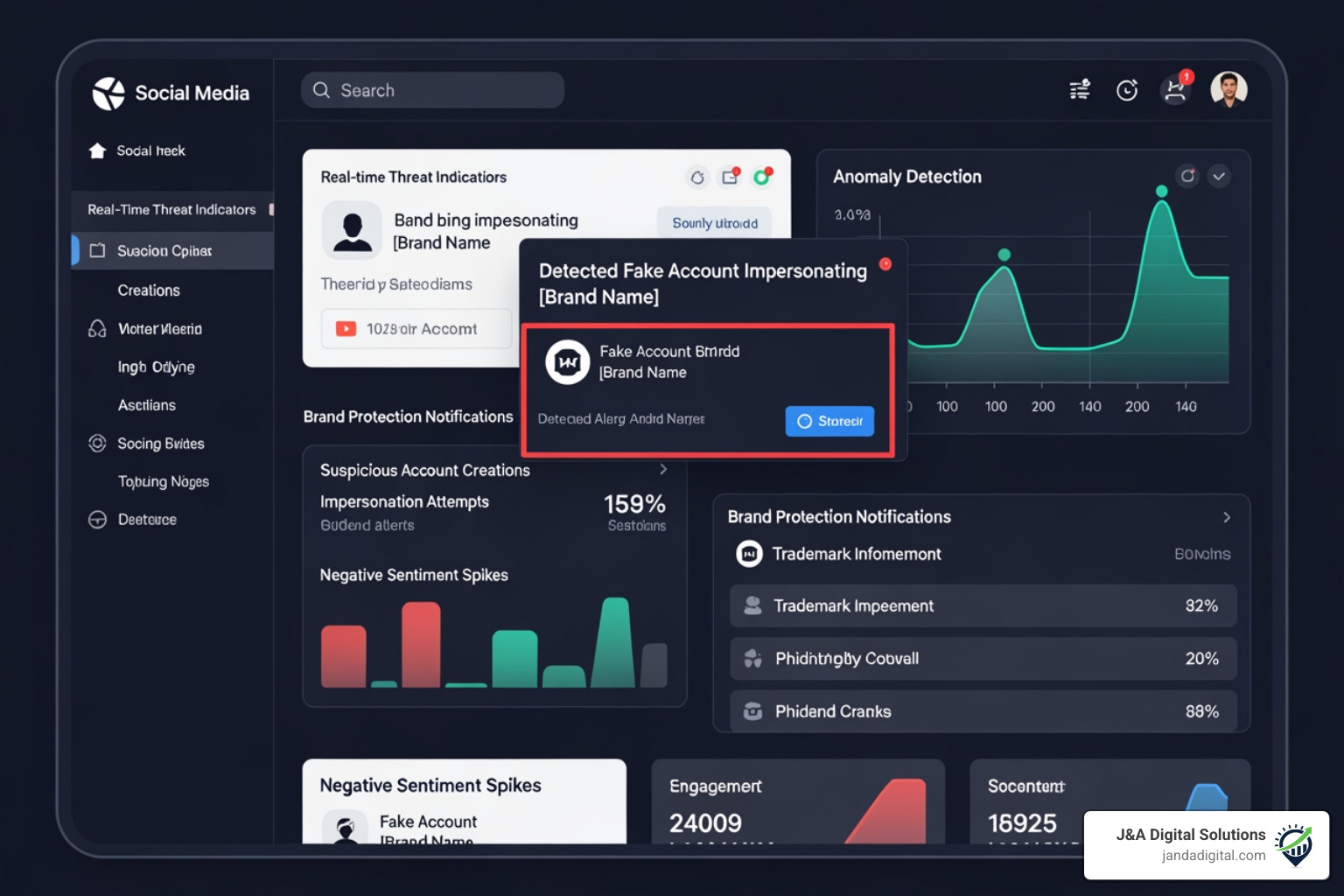
This is the part many businesses underestimate. Reputation monitoring is not just PR polish. It is also an early-warning system for security and fraud.
How social media reputation monitoring helps detect fake accounts and impersonators
Monitoring helps surface:
- Username variations that mimic your brand
- Cloned pages using your logo and photos
- Fraudulent giveaways or discount posts
- Suspicious DMs reported by customers
- Fake support accounts replying to complaints
Often, the first clue is not the fake account itself. It is a customer comment saying, “Did you message me asking for payment info?” That is exactly why monitoring indirect mentions and complaints matters.
For brands that see this kind of activity often, broad mention tracking and fast escalation workflows matter more than vanity engagement metrics.
Catching security issues before they become PR disasters
Monitoring can also reveal:
- Data breach chatter
- Leaked credentials being discussed publicly
- Scam links shared under your brand name
- Malicious domains impersonating your site
- Social engineering attempts targeting customers
- Repeated complaints that hint at a larger issue
The reputation-security overlap is very real. A fake promo page can steal customer data. A spoofed support account can spread phishing links. By the time legal or IT hears about it, customers may already blame your brand.
Building a response workflow with marketing, support, and security teams
The best tools do not just detect issues. They help route them.
Your workflow should define:
- Who gets what alert
- What counts as a customer service issue vs. a threat issue
- When legal review is required
- How evidence gets captured
- Who owns public responses
- When to pause scheduled content
For example:
- Detection: alert flags fake profile or negative spike
- Triage: marketing or support verifies issue
- Escalation: security or leadership joins if fraud or breach risk exists
- Response: public statement, private outreach, platform reporting
- Review: document what happened and improve the playbook
Product Roundup: The Best Social Media Reputation Monitoring Tool Categories
Below is the easiest way to shop tools without drowning in feature pages.
| Tool category | Best use case | Feature depth | Staffing needs | Cost efficiency |
|---|---|---|---|---|
| Review + local monitoring tools | Local businesses | Medium | Low | High |
| Mention and listening tools | Growing brands | Medium to high | Low to medium | High |
| Brand protection-focused tools | High-risk brands | High | Medium | Medium |
| Multi-location social suites | Franchises and location-based teams | High | Medium | Medium |
| Enterprise AI monitoring suites | Large organizations | Very high | High | Varies |
Best for local businesses that need reviews and social monitoring in one place
If you rely on local trust signals, start here.
These tools are best when you need:
- Review monitoring across multiple platforms
- Listings visibility support
- Fast response workflows
- Location dashboards
- Connection between reviews, social comments, and local SEO
This matters because reviews and social proof influence map clicks, branded searches, and conversion rates. If local reputation is your priority, also read our guide on managing online reviews.
Research consistently shows how fragmented reputation data can become when reviews are spread across many platforms, which is why centralizing monitoring matters for local businesses.
Best for growing brands focused on mentions, sentiment, and trend spotting
For many businesses, this is the sweet spot.
You want tools that do these well:
- Monitor brand mentions across social, blogs, forums, and news
- Track sentiment over time
- Show historical trends
- Benchmark your visibility against competitors
- Help identify campaign resonance
This category is ideal when you need stronger web-wide visibility without the operational weight of a full enterprise platform.
Best for high-risk brands needing stronger brand protection signals
If you are more worried about fraud, misinformation, impersonation, or crisis risk than likes and shares, prioritize protection features.
Key capabilities include:
- Real-time crisis alerts
- Impersonation monitoring
- Visual content detection
- Anomaly detection
- Threat-intelligence style workflows
- Takedown readiness
This category is especially relevant if your brand gets copied often or operates in a trust-sensitive space.
Best for multi-location teams with approvals and unified inboxes
For businesses with several locations, branch managers, or franchise-style workflows, monitoring needs structure.
Look for:
- Approval workflows
- Shared inboxes
- Role-based permissions
- Response SLA tracking
- Location-based analytics
- Coordination between brand and local teams
These features prevent rogue posting, missed comments, and inconsistent responses between locations. If your Columbus and Lancaster teams both touch social, this matters more than fancy charts.
Best for enterprises needing deep analytics and AI summaries
Enterprise tools tend to win on:
- Massive source coverage
- AI summaries and executive reporting
- Multilingual analysis
- Historical trend depth
- Compliance support
- Competitive benchmarking
That kind of efficiency matters when teams are analyzing huge volumes of mentions.
How to Implement Social Media Reputation Monitoring Without Drowning in Data
A good system should reduce chaos, not create a second full-time job.
Step-by-step social media reputation monitoring setup
Start with a keyword list that includes:
- Business name
- Common misspellings
- Product and service names
- Executive or spokesperson names
- Campaign hashtags
- Branded hashtags
- Location terms tied to your brand
- Scam phrases customers might use when reporting issues
Then:
- Choose your priority channels
- Set real-time alerts for high-risk terms
- Build filters to remove irrelevant noise
- Create dashboards for support, marketing, and leadership
- Define escalation thresholds
- Review weekly, then refine
For local brands, include city-modified searches related to Columbus and Lancaster if customers commonly mention your location with your name.
Metrics that prove your monitoring is working
Do not judge success by mention volume alone. Loud is not always good.
Track:
- Average response time
- Sentiment trend over time
- Resolution rate
- Share of voice
- False positive rate
- Crisis containment speed
- Number of fake accounts identified and reported
- Review response coverage
If your team is responding faster, catching issues earlier, and seeing fewer unresolved public complaints, the system is working.
How to handle a social media reputation crisis
When trouble hits:
- Pause scheduled posts immediately
- Acknowledge the issue quickly
- Avoid guessing or getting defensive
- Move case-specific details into private channels when appropriate
- Keep public updates clear and factual
- Document everything
- Run a postmortem after the dust settles
Transparency usually beats silence. A cheerful promotional post dropped in the middle of a service failure or scam wave is how brands accidentally become screenshots.
Legal and operational considerations before you escalate
Before you start firing off takedown requests like an action hero, keep these basics in mind:
- Capture screenshots and URLs
- Log dates, times, and account handles
- Follow each platform’s reporting process
- Involve legal counsel if defamation or fraud escalates
- Be cautious about public accusations
- Build internal policy playbooks in advance
Documentation matters. If you ever need platform action, legal review, or insurance support, evidence beats memory every time.
Trends Shaping the Future of Social Media Reputation Monitoring
The market is changing fast, and 2026 tools look very different from older social dashboards.
Why AI and real-time alerts are changing the game
AI is now doing more than basic positive-negative sentiment.
Modern tools can help with:
- Faster mention triage
- Summaries of huge data sets
- Sarcasm detection
- Peak detection for sudden spikes
- Predictive alerts for emerging issues
- Smarter filtering to reduce noise
As AI summaries and automated triage improve, teams can spend less time sorting and more time acting.
Beyond social: where monitoring is expanding next
Brand conversations are spreading into:
- Podcasts
- Forums and niche communities
- Review platforms
- News coverage
- Video channels
- AI assistants and LLM-generated answers
That last one matters more than most businesses realize. Monitoring your brand’s presence in AI-generated responses is becoming part of modern share-of-voice analysis.
What smarter brands will do differently in 2026
The brands that win will:
- Use cross-team dashboards
- Connect reputation monitoring to customer support
- Treat fake accounts as a security problem, not just an annoyance
- Watch local reputation signals tied to near-me visibility
- Combine monitoring with proactive outreach and trust-building
In other words, they will stop treating reputation as “marketing’s problem” and start treating it like an operational asset.
Frequently Asked Questions About Social Media Reputation Monitoring
What is the difference between monitoring reputation and managing reputation?
Monitoring is seeing what is happening. Managing is deciding what to do about it.
Monitoring covers alerts, mentions, reviews, and sentiment detection. Management includes responding, fixing issues, publishing updates, improving service, and repairing trust.
If you want the broader service landscape, our roundup of reputation monitoring services is a helpful next step.
How can businesses measure ROI from social media reputation monitoring?
ROI comes from prevention and performance.
You can measure:
- Faster response times
- Reduced churn from unresolved complaints
- Fewer missed leads
- Lower support costs from quicker triage
- Reduced crisis impact
- Improved review and sentiment trends
- Better branded search trust
For local businesses, protecting reputation also protects conversions from organic and map-based searches. That ties directly into lead flow.
Which features matter most if your biggest fear is fake accounts and security threats?
Prioritize:
- Impersonation alerts
- Visual logo detection
- Real-time anomaly monitoring
- Broad source coverage
- Escalation workflows
- Evidence capture
- Platform reporting support
If fake accounts are a recurring problem, do not settle for a tool that only tracks tagged mentions on major social channels. That is like installing a smoke detector in one room and calling it a fire strategy.
Conclusion
Social media reputation monitoring is no longer optional if your business depends on trust, reviews, local visibility, or inbound leads. It helps us detect complaints faster, respond before problems grow teeth, and spot fake accounts or scam activity before customers get burned.
The right tool depends on your size, risk level, and workflow complexity. Some businesses need a simple review-and-social dashboard. Others need advanced AI summaries, cross-team routing, and stronger protection signals.
At J&A Digital Solutions, we care about this because reputation directly affects lead generation. If people do not trust what they find when they search for you, your near-me visibility and conversion rate both take a hit.
For more help comparing options, read our guide to reputation monitoring services. And if you want help turning trust into traffic and local leads, explore our SEO services.