

Local Marketing Plan 2026: Dominate Your Market
Why a Local Focus is Non-Negotiable
A local marketing plan is a strategic blueprint that helps businesses attract customers within their geographic service area. It combines digital tactics (like local SEO and Google Business Profile optimization) and traditional methods (like community partnerships and local events).
Key Components of an Effective Local Marketing Plan:
- Define your target local audience – Create detailed customer personas for people in your service area.
- Optimize your online presence – Claim your Google Business Profile and ensure NAP (Name, Address, Phone) consistency.
- Implement local SEO – Target location-specific keywords and create city-specific content.
- Engage your community – Build partnerships, sponsor events, and join local organizations.
- Set SMART goals and budget – Allocate 6-12% of revenue to marketing with measurable objectives.
- Track and measure results – Monitor key metrics like Cost Per Lead, conversion rates, and foot traffic.
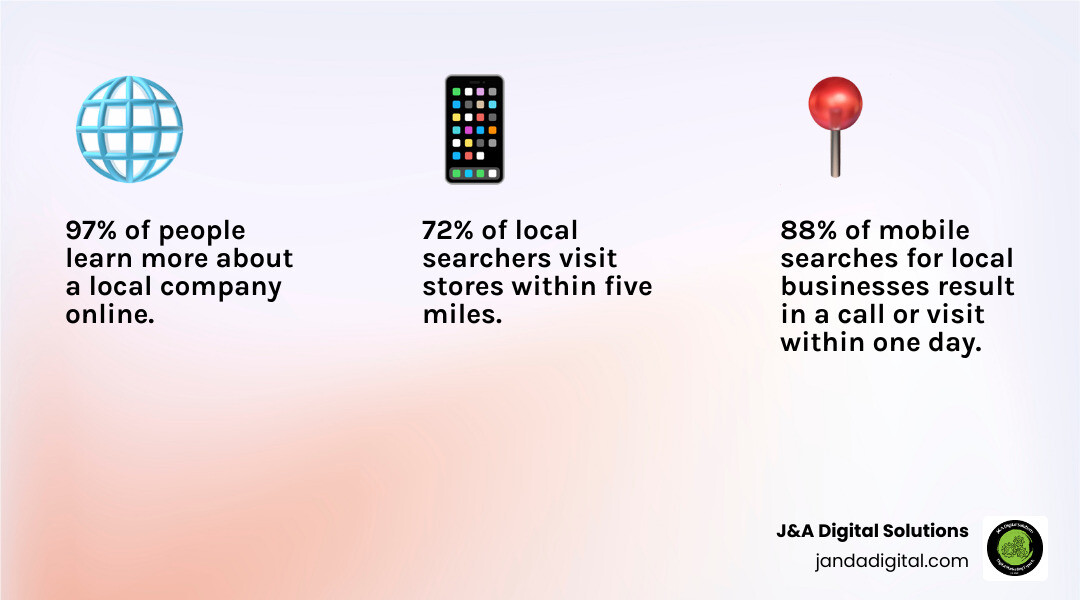
The numbers don’t lie: 97% of people research local companies online, and 88% of mobile searches for local businesses result in a call or visit within one day. A solid local marketing strategy isn’t optional—it’s survival.
Think about how you find local services. When I moved, I googled “[service] near me” to find my salon, gym, and coffee shop. The businesses that appeared with complete profiles and good reviews won my business. The ones that didn’t exist online? I never even knew they existed.
For local service businesses, the challenge is clear. You’re competing for attention in a specific geographic area. Since 72% of people who search for local businesses end up visiting stores within five miles, your ideal customers are right around the corner—if they can find you.
Traditional marketing wastes money trying to reach everyone. A local marketing plan focuses your budget on people in your service area who are actively searching for what you offer. The difference between businesses that thrive and those that struggle is a clear plan that consistently puts them in front of local customers.
I’m Josh Preece. For over 20 years, I’ve helped local service businesses execute marketing plans that generate measurable leads. At J&A Digital Solutions, we’ve refined a system to help local businesses dominate their markets without wasting money.
Key terms for local marketing plan:
Step 1: Laying the Foundation of Your Local Marketing Plan
Before jumping into tactics, you need a solid foundation for your local marketing plan. This involves assessing your current business situation through market research, competitor analysis, a SWOT analysis, and defining your Unique Value Proposition (UVP). A good plan helps you understand your market, tailor your message, and keep spending on budget.
Market research can be as simple as surveying existing customers. For businesses in Columbus or Lancaster, Ohio, free tools like Claritas and the U.S. Census Bureau provide demographic data like household income, size, and age for any ZIP code. Next, analyze your competitors. See how they rank in local searches and what promotions they’re running to find gaps and opportunities.
A SWOT analysis helps you objectively look at your business’s Strengths, Weaknesses, Opportunities, and Threats. For instance, a strong social media presence (strength) but low website visits (opportunity) can inform your strategy. Finally, define your unique selling proposition (UVP). What makes your business in Columbus or Lancaster stand out? Clearly articulating your UVP is crucial for crafting compelling marketing messages.
Define Your Target Local Audience
Connecting with your ideal customer is the heart of a successful local marketing plan. You’re not trying to reach everyone, just those most likely to become loyal customers in Columbus or Lancaster.
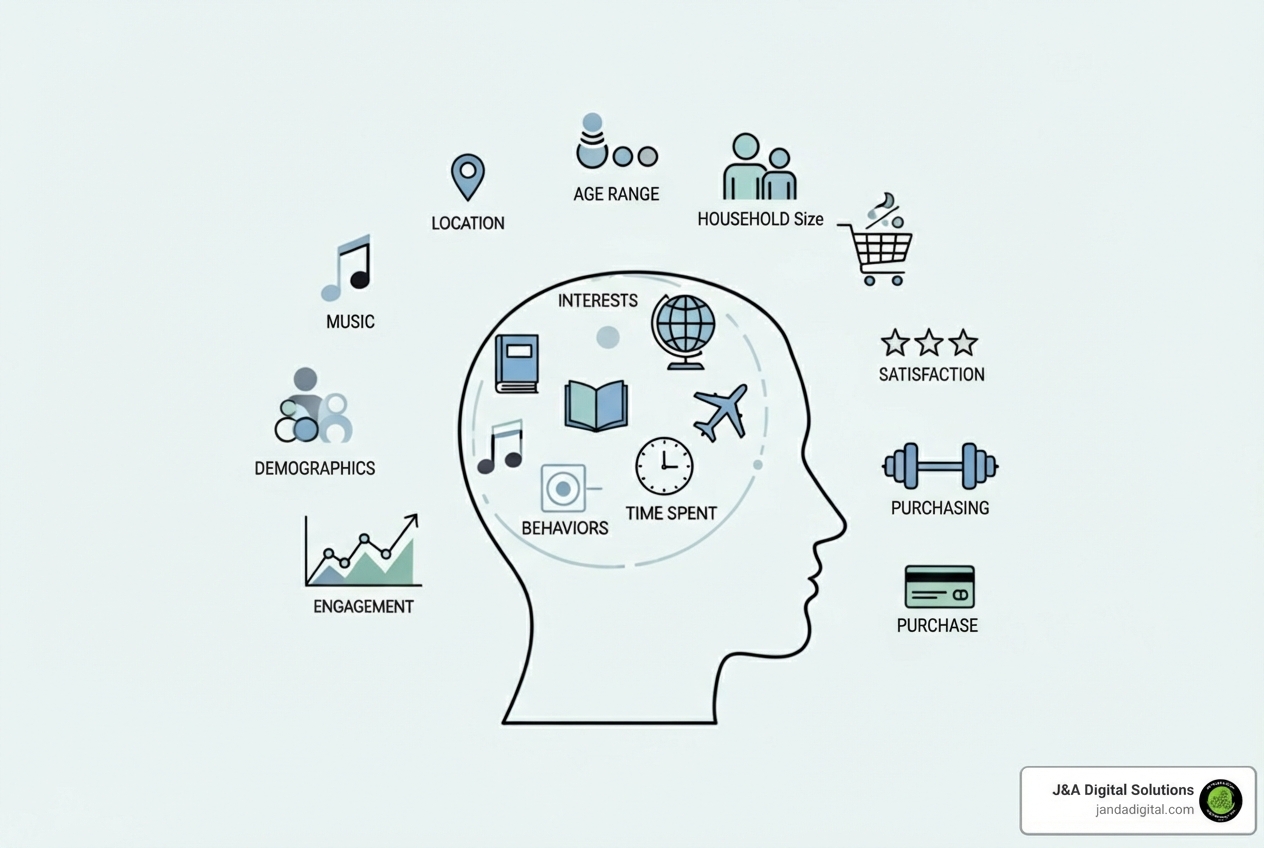
This is where buyer personas—detailed descriptions of your best-fit customer—come in. They include demographics, interests, goals, and pain points. Use an ICP template and survey your happiest clients to gather this information. Look for patterns to build a vivid picture of who you’re trying to reach. HubSpot’s free buyer persona generator can help.
You also need to define your local service area. This could be a few neighborhoods in Columbus or the entire city of Lancaster. This helps set parameters for advertising and ensures you’re reaching customers who are close enough to use your services.
Set a Budget and SMART Goals
No local marketing plan is complete without clear goals and a realistic budget.
First, the budget. New businesses typically allocate 12-20% of gross revenue to marketing, while established businesses allocate 6-12%. For example, a Columbus business with $100,000 in revenue might reinvest $10,900. Budgeting your time is also important; consistent weekly effort yields results even with limited funds. We offer more info about Local SEO Pricing to help you understand potential costs.
Next, set SMART goals: Specific, Measurable, Achievable, Relevant, and Time-bound. Instead of “we want more customers,” a SMART goal is “Increase website visits from Columbus residents by 15% in the next six months.” Common goals include building an online presence, generating leads, and increasing brand awareness in Columbus or Lancaster.
Step 2: Building Your Digital Fortress for Local Dominance
Your online presence is your digital storefront. For businesses in Columbus or Lancaster, Ohio, this means being easily found by local customers. Since 97% of people learn about a local company online, your digital fortress is critical.
A cornerstone is a mobile-friendly website. Over half of internet traffic is mobile, and 61% of mobile searchers are more likely to contact a local business with a mobile-friendly site. Use Google’s Mobile-Friendly Test tool to check your site. Also, ensure NAP consistency: your Name, Address, and Phone number must be identical everywhere online. This is vital for small business marketing and helps search engines trust your information. Finally, online reviews are powerful social proof. Actively encourage and respond to reviews to build trust.
Optimize Your Google Business Profile (GBP)
Your Google Business Profile (GBP) is arguably the most important part of your digital fortress. It’s a free tool that’s the biggest factor in ranking in Google’s local map pack.
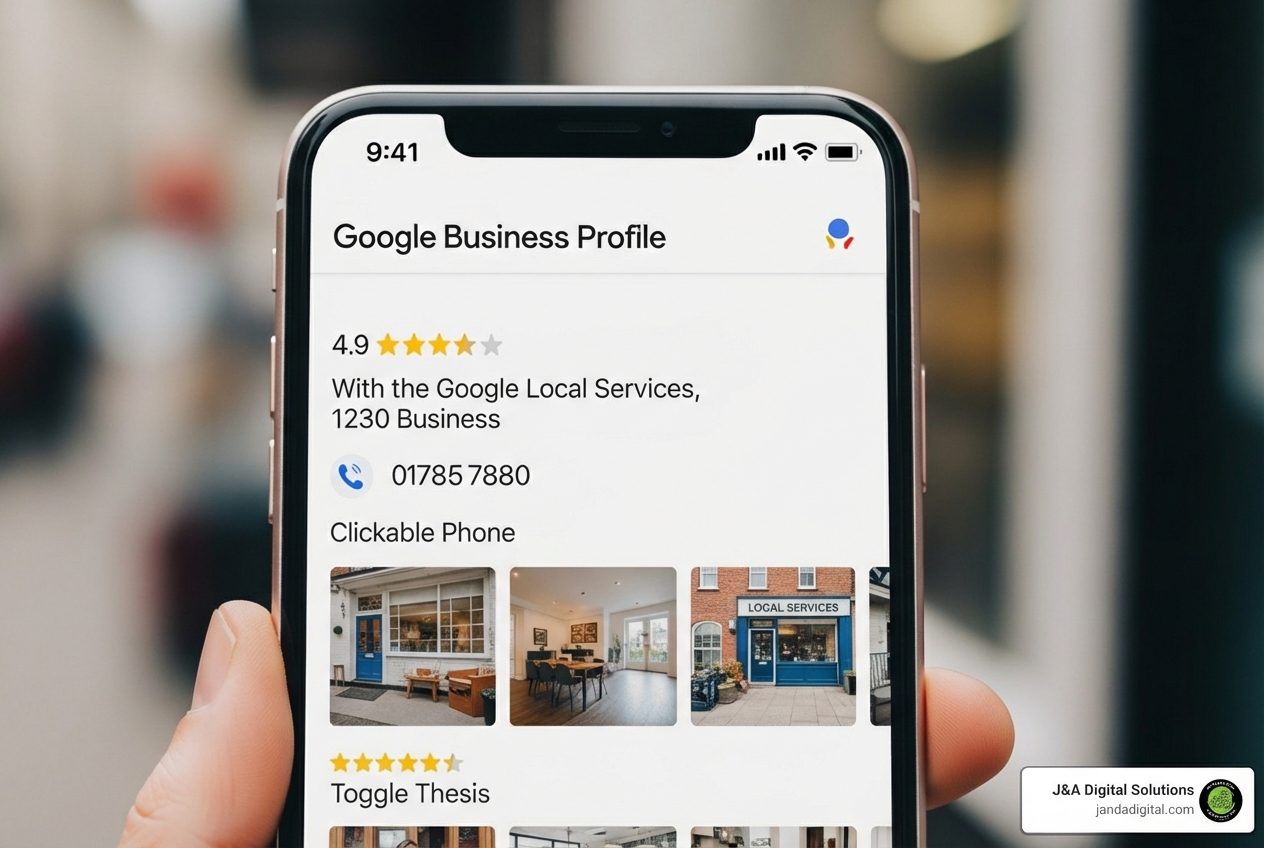
To optimize your GBP:
- Claim and verify your profile: Go to Google Business Profile and follow the setup wizard.
- Add high-quality photos: Showcase your storefront, products, team, and services.
- Select relevant categories: Choose categories that accurately describe your business in Columbus or Lancaster.
- Enable messaging: Allow customers to contact you directly.
- Encourage and respond to reviews: Positive reviews build trust. We have 10 Proven Strategies to Boost Your Local Google Rating and Attract More Customers that can help.
- Use posts: Share updates, offers, and events directly on your GBP.
Use Google Business Insights to track your profile’s performance, including visits and customer search queries. This data is gold for refining your local marketing plan.
Master Local SEO to Rank in “Near Me” Searches
Local SEO is how customers in Columbus and Lancaster find you during “near me” searches. With “near me” search volume up 900% in two years and 50% of mobile searchers visiting a store within a day, showing up at the moment of intent is critical.
Our strategy includes:
- On-page SEO: Naturally include local keywords like “HVAC Columbus Ohio” in your website’s titles, headings, and content.
- Local content creation: Start a blog targeting local search terms, like “Spring Cleaning Tips for Columbus Homes.”
- City-specific landing pages: Create dedicated, optimized pages for each neighborhood or town you serve.
- Local link building: Earn backlinks from other reputable local businesses or news sites in Columbus and Lancaster.
- Localizing our website: Make your content relevant. Instead of “vegan bakery,” your homepage should read “Best Vegan Bakery in Columbus, Ohio.”
Tools like Google Trends can help identify popular local search terms. By mastering Local SEO Secrets 2023: Secrets From The Best Agencies, you ensure your digital fortress is highly visible to your local community.
Step 3: Activating Your Plan with Effective Strategies
With your foundation and digital fortress in place, it’s time to activate your local marketing plan with a mix of digital and traditional strategies to reach your audience online and offline.
| Digital Local Marketing Channels | Traditional Local Marketing Channels |
|---|---|
| Website & Local SEO | Direct Mail & Flyers |
| Google Business Profile | Local Print Ads (Newspapers, Mags) |
| Social Media Marketing | Radio & Local TV Ads |
| Email Marketing | Local Event Sponsorships |
| SMS Marketing | Community Engagement (Chamber, BBB) |
| Paid Digital Ads (Google, Social) | Sidewalk Signs & In-store Promotions |
Content Marketing: Create valuable content (blogs, videos) that resonates with your Columbus and Lancaster audience by addressing local pain points.
Email Marketing: A local email list provides direct access to customers, with an average ROI of $36 for every $1 spent. Grow your list with in-store sign-ups or website pop-ups using tools like OptinMonster and GetResponse, then run personalized, local campaigns.
SMS Marketing: With a 98% open rate, SMS is powerful for urgent offers or updates, like a Columbus caterer texting about a holiday sale.
Paid Advertising: Geo-targeted Google Ads and social media ads let you precisely target specific ZIP codes in Columbus and Lancaster. Google estimates a PPC return of $2 in revenue and $8 in profit for every $1 spent. Don’t forget traditional ads like local radio or direct mail from services like Valpak.
Engage with Your Community On and Offline
Community connection is a powerful marketing strategy that builds trust and creates genuine relationships.
Local Business Partnerships: Expand your reach by partnering with complementary, non-competing businesses in Columbus or Lancaster (e.g., an HVAC company and a home improvement store). Focus on mutual benefits, create a written agreement, and explore joint discounts or referral systems. One contractor, Miko Parsanen, built relationships with cafe owners to post flyers on community boards, leading to referrals.
Sponsoring Local Events: Sponsoring a youth sports team or a local festival in Columbus or Lancaster builds brand visibility and shows community commitment.
Hosting Workshops or Classes: Position yourself as a local expert. A Columbus real estate agent could host a “First-Time Home Buyer” seminar. As Khris Steven of KhrisDigital notes, local workshops are a fantastic way to get new customers and generate referrals.
Joining Local Groups: Membership in your local Chamber of Commerce or a Business Networking International (BNI) chapter is incredibly valuable, with leads from these groups having a 40% close rate. Joining the Better Business Bureau (BBB) also demonstrates trustworthiness.
Direct Mail and Flyers: Tangible marketing like professionally designed flyers with QR codes on community boards can still be highly effective.
Local Media Engagement: Proactively engage with local media in Columbus and Lancaster by offering your expertise for articles or sending press releases.
Leverage Local Social Media Marketing
Social media is a powerful tool for local businesses to connect with their community, as 73% of consumers find new brands there.
- Geo-targeted Ads: Use Facebook and Instagram to run ads targeting specific neighborhoods in Columbus or Lancaster, starting with a small test budget.
- Local Facebook Groups: Engage in community groups by posting helpful tips and answering questions to build trust.
- Location Tagging: Always tag your business location in posts to increase visibility in local searches.
- User-Generated Content: Encourage customers to share their experiences and tag your business, then re-share their content.
- Local Influencer Collaborations: Partner with local influencers for reviews or sponsored posts.
- Creative Local Social Media Contest Ideas:
- “Local Hero” Nomination: Ask followers to nominate a local hero for a prize from your business.
- “Guess Our Location”: Post a photo of a local landmark and offer a discount for the correct guess.
- “Support Local Challenge”: Encourage followers to post about their favorite local businesses using a specific hashtag.
- “Photo Contest”: Ask customers to share photos using our product or service in a local setting.
- “Community Poll”: Spark engagement by asking for opinions on local topics related to your business.
Step 4: Measuring Success and Refining Your Plan
A local marketing plan is just the beginning. The real magic is in consistently measuring efforts, identifying what works, and refining your strategies. This feedback loop is crucial for growth.
Common pitfalls include unclear partnership roles, expecting immediate results (marketing is a marathon), and failing to adapt. Your market is dynamic, so your plan must be flexible. Track your Return on Investment (ROI) by tying results to specific activities. For example, use a unique landing page or promo code for an ad campaign to track its direct impact.
Use A/B testing to compare different ad creatives, email subject lines, or calls-to-action to see what performs best with your Columbus and Lancaster audience. This data-driven approach lets you continually optimize for maximum impact. Regularly reviewing performance and making adjustments ensures your local marketing plan remains effective.
Key Metrics for Your Local Marketing Plan
To measure success, track these key performance indicators (KPIs) for insight into online performance and real-world impact.
- Google Business Profile Insights: Monitor views, customer actions (calls, clicks, direction requests), and the search queries people use to find you.
- Website Traffic: Analyze how many local users from Columbus and Lancaster visit your site and which pages they engage with.
- Conversion Rates: Measure how many visitors become customers. A good target is generally between 2% and 5%.
- Cost Per Lead (CPL): Calculate how much each lead costs by dividing a campaign’s total cost by the leads it generated.
- Customer Lifetime Value (LTV): The total revenue a customer generates. Aim for an LTV that is at least three times your customer acquisition cost.
- Foot Traffic: For brick-and-mortar stores, track foot traffic to see the direct impact of your marketing.
- Phone Calls: Track calls from your website, GBP, and ads using unique phone numbers.
- Customer Retention Rate: See how many customers stay with you over time.
- Customer Satisfaction Score (CSAT): Measure how well your offerings meet customer expectations.
By tracking these metrics, you gain a clear understanding of your local marketing plan’s effectiveness and can make informed decisions to improve results.
Frequently Asked Questions about Local Marketing Plans
What are the essential components of a local marketing plan?
An essential local marketing plan includes defining your target local audience through buyer personas, setting SMART (Specific, Measurable, Achievable, Relevant, Time-bound) goals, conducting a SWOT analysis and competitor research, establishing a clear Unique Value Proposition (UVP), and determining your marketing budget. It then outlines specific strategies for both online (e.g., Google Business Profile optimization, local SEO, social media, email/SMS marketing, paid ads) and offline (e.g., community engagement, partnerships, direct mail) channels. Finally, it includes a plan for measuring results and continuously refining the strategy.
How much should a small business budget for local marketing?
While every business is unique, a general guideline for marketing budget allocation suggests that new businesses typically allocate 12-20% of their gross revenue to marketing. Established businesses, on the other hand, usually allocate 6-12%. This budget should encompass both monetary investment (for digital ads, content creation, tools, etc.) and a dedicated time investment from business owners or staff. It’s often advisable to err on the side of overestimation to accommodate unexpected costs or opportunities.
How is local marketing different from hyperlocal marketing?
Local marketing targets consumers within a general radius of a business’s physical location, such as an entire city like Columbus or Lancaster. It uses a broad range of digital and traditional tactics to reach this audience. Hyperlocal marketing is a more granular approach, specifically targeting potential customers in a very small, defined portion of a geographic area, such as a particular neighborhood, street, or even block. Examples include direct mail to specific zip codes, flyers distributed door-to-door in a small community, or highly localized social media groups. The primary goal of hyperlocal marketing is to increase business within that very specific, targeted area.
Conclusion: Take Control of Your Local Market
When 80% of US consumers search for local businesses weekly, a robust local marketing plan is a necessity. We’ve covered the critical steps: building a foundation, creating a digital fortress, activating strategies, and measuring success.
The key takeaway is consistency. A successful local marketing plan is an ongoing commitment to understanding your local audience in Columbus and Lancaster, adapting to their needs, and consistently showing up where they’re looking. This strategic approach allows you to move beyond surviving to truly dominating your local market.
At J&A Digital Solutions, we understand the challenges and opportunities local businesses face. Our proprietary lead generation system is designed to help businesses in Columbus and Lancaster dominate “near me” searches. We’re so confident in our approach that we offer a “5 Lead Guarantee” to deliver real customers without risk, so you can focus on what you do best while we bring you the business.
Don’t let your ideal customers pass you by because they can’t find you online. Take control of your local market today. Get started with your custom Local Marketing plan today!