

Cyber Monday Marketing Strategies: Crush 2025 Success
Why Cyber Monday Marketing Strategies Matter for Your Business
Cyber monday marketing strategies are essential for any business looking to capitalize on one of the year’s biggest online shopping events. Cyber Monday, which falls on the Monday after Thanksgiving, has evolved from a single-day online sale into a critical revenue driver for businesses of all sizes. In 2024, shoppers spent a record-breaking $13.3 billion on Cyber Monday alone—a 7% increase from the previous year.
Quick Answer: Top Cyber Monday Marketing Strategies
- Start Early – Begin planning in September/October to build anticipation
- Segment Your Audience – Personalize offers based on customer behavior and preferences
- Create Urgency – Use countdown timers, limited stock alerts, and flash sales
- Optimize for Mobile – Over 70% of traffic comes from mobile devices
- Automate Cart Recovery – Combat the 80%+ abandonment rate with targeted emails
- Leverage Multiple Channels – Combine email, SMS, social media, and retargeting ads
- Test Everything – Ensure your website can handle traffic spikes before the big day
The opportunity is massive, but so is the competition. Every business—from local service providers to major retailers—is fighting for attention during this period. The brands that succeed aren’t just offering discounts; they’re creating strategic, multi-phase campaigns that build anticipation, deliver personalized experiences, and drive urgency at the right moments.
What makes Cyber Monday particularly valuable is its focus on online sales, which levels the playing field. You don’t need a massive physical storefront to compete. With the right cyber monday marketing strategies, even small businesses can capture significant market share by targeting the right audience with compelling offers.
The key is understanding that Cyber Monday isn’t a standalone event—it’s part of a larger holiday shopping season that can account for a substantial portion of your annual revenue. Brands that start planning early, segment their audiences effectively, and execute with precision consistently outperform those that throw together last-minute campaigns.
I’m Josh Preece, founder of J&A Digital Solutions, and over the past 20+ years I’ve helped businesses of all sizes—from local contractors to national brands—execute successful cyber monday marketing strategies that generate measurable results. My approach combines technical expertise with data-driven tactics to help you cut through the noise and connect with ready-to-buy customers.
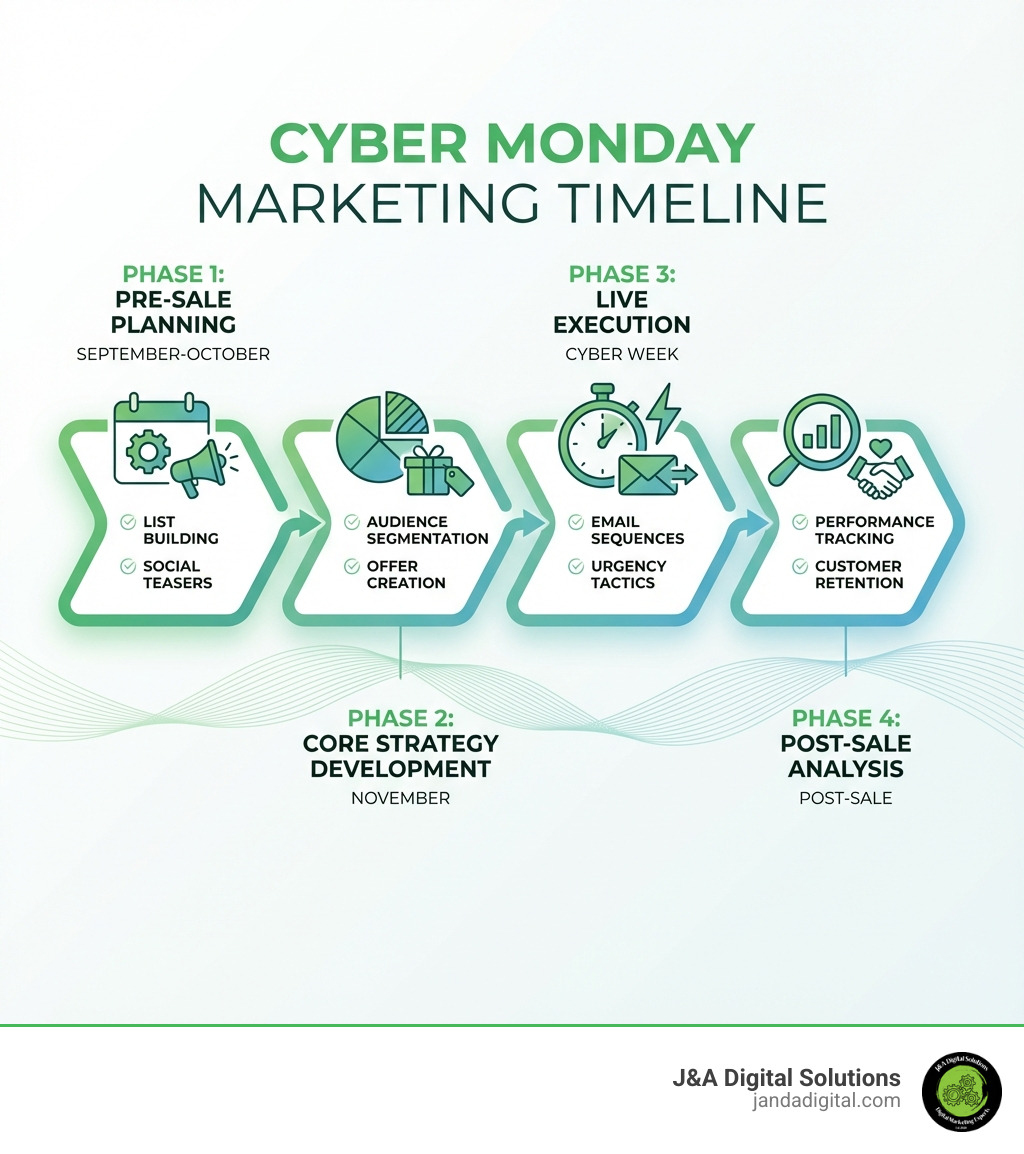
Phase 1: Pre-Sale Planning and Hype Building (September – October)

When it comes to Cyber Monday marketing strategies, waiting until November is simply too late. The most successful campaigns begin long before the leaves even start to turn. Think of it like preparing for a big holiday feast—you wouldn’t start cooking on Thanksgiving morning, would you? We need to plan, prep, and build anticipation.
Data shows that people start searching for Black Friday and Cyber Monday deals as early as October, with 59% of shoppers already beginning their holiday shopping before the BFCM weekend even kicks off. A significant 50% of holiday shoppers even plan to make purchases before Halloween. This means our target audience in Columbus and Lancaster, Ohio, is already in a shopping mindset well in advance.
Our planning phase, ideally starting in September, involves setting clear goals. What do we want to achieve? Is it increased sales, new customer acquisition, or perhaps boosting brand awareness? Once our goals are defined, we can move into inventory management. This is crucial to ensure we have enough stock for the anticipated surge in demand, avoiding the dreaded “out of stock” message that can disappoint customers and lose sales.
Effective lead generation is the cornerstone of building pre-sale hype. We want to collect as many new email addresses as possible throughout September and October. This gives us a direct line of communication with potential customers who are already showing interest.
Building Your Pre-Sale Cyber Monday Marketing Strategies
Our primary objective during this phase is to grow our email list and build excitement. Here’s how we approach it:
- Email List Growth: We use pop-up forms on our website, offering incentives like early access to deals or exclusive discounts in exchange for an email address. This is a low-cost, high-return strategy.
- Creating a Cyber Monday Waitlist: A dedicated waitlist landing page is a powerful tool. We tease our upcoming offers and compel sign-ups. The unique insight here is to attach a quiz to this waitlist. This not only validates our offer ideas but also collects valuable data and allows us to segment our audience from the get-go. Imagine offering a quick “What’s Your Perfect Holiday Gift?” quiz to gather preferences!
- Social Media Teasers and Sneak Peeks: We run teaser campaigns across our social media channels. This could involve short videos hinting at upcoming products or services, behind-the-scenes glimpses of our team preparing for the big sale, or even polls asking customers what deals they’d like to see. This builds a sense of community and FOMO (Fear Of Missing Out).
- Influencer Outreach: Partnering with local influencers or micro-influencers in the Columbus and Lancaster areas can significantly expand our reach and build trust. They can create authentic content showcasing our products and hinting at upcoming Cyber Monday deals.
- Content Planning: Developing a Strategies to Build a Traffic-Boosting Content Calendar specifically for the pre-Cyber Monday period helps us stay organized. This includes blog posts, social media updates, and email newsletters that subtly build up to the sale.
- Early Investment in Paid Advertising: Leads on platforms like Google Ads get more expensive as we get closer to BFCM. By investing in paid advertising earlier, we can secure leads at a lower cost, driving traffic to our waitlist pages and social channels. This proactive approach helps us avoid the intense competition and rising ad costs that typically occur in November. We focus on building our owned channels (email, SMS) by leveraging social media to drive followers to sign up for our exclusive lists.
By taking these steps in September and October, we set ourselves up for success, ensuring we’re not scrambling at the last minute but rather strategically positioned to capture customer attention when it matters most.
Phase 2: Core Cyber Monday Marketing Strategies for Maximum Impact (November)
As November rolls around, our focus shifts from building anticipation to refining our offers and ensuring they resonate deeply with our audience. This is where our Cyber Monday marketing strategies truly come alive, leveraging personalization and crafting compelling incentives.
Leveraging Personalization and Segmentation
In a crowded marketplace, generic discounts simply won’t cut it. Customers are bombarded with offers, and to stand out, we need to speak directly to their individual needs and preferences. This is why audience segmentation is not just crucial—it’s transformative.
- Audience Segmentation: We divide our email list and advertising audiences into smaller, more specific groups based on various factors:
- Past Purchase History: What products have they bought before?
- Browsing Behavior: What pages have they visited? What items have they added to their cart but not purchased?
- Demographics/Interests: What did we learn from our pre-Cyber Monday quizzes?
- Engagement Level: Who are our most loyal customers (VIPs) versus those who need a stronger nudge?
- Personalized Offers: With segmented audiences, we can deliver highly relevant offers. For example, if a customer previously purchased a specific product, we can offer a discount on complementary accessories or an upgrade. If someone showed interest in a particular category during our pre-sale quiz, we can tailor bundles specifically for them. Personalized marketing isn’t just a nice-to-have; it leads to a 20% increase in sales, and we’ve seen personalized messaging climb 61% in effectiveness. This level of custom communication makes customers feel valued and understood, driving higher conversion rates. Our PPC Services can help us target these segments precisely with custom ad creatives.
- Zero-Party Data: The quizzes we deployed during the pre-sale phase are invaluable here. This “zero-party data” (information customers willingly share) allows us to create hyper-personalized bundle offers that truly align with their expressed needs, rather than just inferred behavior.
- Retargeting Non-Buyers: Not everyone who showed interest on Black Friday will have purchased. We use retargeting ads and email sequences to re-engage these potential customers with personalized messages, perhaps reminding them of the products they viewed or offering an exclusive perk to complete their purchase. This strategy targets “warm” leads who already know our brand. Mastering Audience Understanding for Impactful Content is key to making these personalized offers truly hit home.
Crafting Compelling Offers
Our offers need to be irresistible, but that doesn’t always mean the deepest discount. Sometimes, value, exclusivity, or convenience can be even more compelling.
- Value Proposition: We focus on what our target audience in Columbus and Lancaster cares about most. For a local service business, this might be a bundled service package or a free consultation with a discounted follow-up. For an e-commerce store, it could be a valuable product bundle.
- Strategic Discounts: While everyone loves a discount, research from 2024 showed that discounts in the 10–15% and 20–25% ranges often performed better than excessively steep price cuts. Setting discounts too high can dilute brand perception or even offend loyal customers who bought at full price. We aim for value-driven purchasing.
- Bundles: Combining related products or services into a discounted bundle is an excellent way to increase average order value. A “home office essential” bundle or a “winter wellness” package can be highly appealing.
- Free Shipping: This is often a deciding factor in making a purchase. If feasible, offering free shipping can significantly boost conversions.
- Gift with Purchase: A free gift with a minimum purchase can incentivize customers to spend more, adding perceived value without deep discounting.
- Flash Sales & Limited-Edition Products: Short, high-impact flash sales create urgency and excitement. Limited-edition products or exclusive bundles available only for Cyber Monday tap into FOMO and drive immediate purchases.
- Flexible Payment Options: Offering “Buy Now, Pay Later” (BNPL) options can significantly boost sales, especially for higher-priced items. BNPL drove nearly $1 billion in spending on Cyber Monday 2024, with 75% of those transactions happening on mobile devices. This helps reduce sticker shock and makes purchases more accessible for budget-conscious shoppers.
- Holiday Gift Guides: We create curated holiday gift guides, organized by recipient, budget, or interest. This helps overwhelmed shoppers find the perfect gift and positions our products effectively. This content also aligns perfectly with The Power of Superior Content in Digital Marketing by providing value beyond just a sales pitch.
By thoughtfully segmenting our audience and crafting compelling offers, we ensure our Cyber Monday marketing strategies are both effective and profitable, maximizing our impact in November.
Phase 3: Execution and Driving Urgency (Cyber Week)
As Cyber Week arrives, it’s go-time! Our meticulous planning culminates in the execution phase, where we deploy our carefully crafted Cyber Monday marketing strategies across multiple channels. The goal now is to drive immediate action, leveraging urgency and scarcity to convert browsing into buying.
Executing Your Live Cyber Monday Marketing Strategies
Our multi-channel approach is key here. While paid ads and social media play a role, email and SMS often take center stage due to their directness and high engagement rates.
- Email Marketing Sequences: Email remains a powerhouse for driving Cyber Monday sales. We plan a strategic sequence of emails:
- Launch Email: Sent on Cyber Monday morning, announcing the sale with clear calls to action.
- Reminder Email: Sent midday, highlighting best-sellers or popular deals to those who haven’t opened or clicked the first email.
- Last-Chance Email: Sent a few hours before the sale ends, creating a strong sense of urgency. Most brands send between 2 and 4 emails within a 48-hour window for Cyber Monday, so we make sure our messages are concise and compelling.
- Urgency and Scarcity Tactics: Few things motivate purchases like the fear of missing out. We infuse urgency into all our communications:
- Countdown Timers: These are incredibly effective on landing pages, product pages, and even within emails. Tools like HurryTimer can create dynamic countdowns that visually reinforce the limited-time nature of our offers.
- Low-Stock Alerts: Instead of generic “running out” messages, we use specific numbers like “Only 5 left in stock!” Research shows that communicating the exact number of products left can result in 50% more clicks.
- Time-Sensitive Deals: We might introduce hourly flash sales or special discounts that expire after a very short period, encouraging immediate decisions.
- SMS Campaigns: SMS has become an indispensable part of our strategy. With much higher open rates than email, it’s perfect for time-sensitive offers:
- Early Access for VIPs: We might send an exclusive SMS code to our most loyal customers for early access to deals.
- Flash Alerts: Short, punchy messages for sudden price drops or limited stock items.
- Last-Minute Reminders: A final nudge before the sale ends. Brands that added SMS to their marketing mix saw a 20% year-over-year increase in e-commerce revenue during BFCM 2024, demonstrating its power.
- Social Media Ads: Our Social Media Services ensure our social ads are running strong, targeting specific segments with compelling creatives that highlight our best Cyber Monday deals. We use a mix of image and video ads to capture attention.
- Retargeting Ads: We don’t forget about those who visited our site but didn’t buy. Our Ads team deploys retargeting campaigns that show personalized ads for products they viewed or added to their cart, often with an added incentive. These campaigns typically yield the highest conversion rates because they target warm leads.
Tackling Cart Abandonment
It’s a frustrating reality: over 80% of Cyber Monday customers end up abandoning their cart. But this isn’t a lost cause; it’s a massive opportunity for recovery.
- Automated Cart Recovery Emails: We set up automated email sequences to remind customers of items left in their cart. The first email goes out within 24 hours. If they still haven’t purchased, a follow-up email might include a small incentive, like free shipping or a small discount, to seal the deal.
- SMS Reminders: For customers who have opted in, a quick SMS reminder about their abandoned cart can be highly effective, especially with a direct link back to their checkout.
- Seamless Checkout Process: While recovery is important, prevention is better. We ensure our checkout process is as smooth and fast as possible, minimizing steps and offering guest checkout options. We want to make it easy for our local customers in Columbus and Lancaster to complete their purchase without friction. Our goal is to Boost Business Market Through Smart Advertisement and Media Strategies by optimizing every step of the customer journey.
By executing these strategies effectively during Cyber Week, we maximize our sales potential and turn interested shoppers into happy customers.
Phase 4: Optimizing the Experience and Measuring Success
The Cyber Monday frenzy might be over, but our work isn’t. This final phase focuses on ensuring a smooth customer experience, learning from our efforts, and setting the stage for future success. It’s about turning one-time shoppers into loyal customers, especially for our local businesses in Columbus and Lancaster.
Essential Website and UX Optimizations
A flawless website is non-negotiable for Cyber Monday. If your site isn’t fast, responsive, and easy to steer, shoppers will simply go elsewhere.
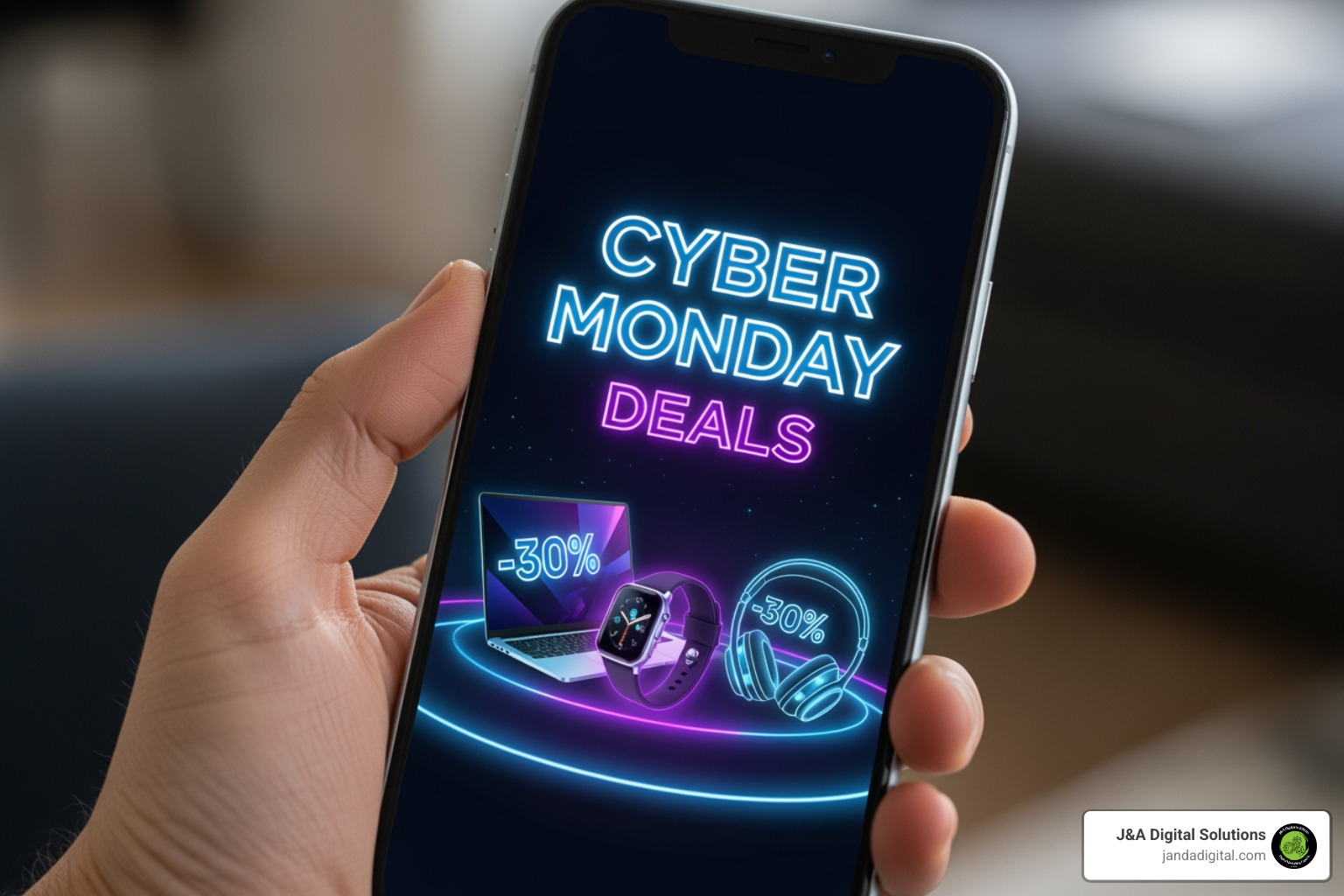
- Mobile-First Design: This is paramount. Over 70% of BFCM traffic now comes from mobile devices, meaning our customers are likely browsing and buying on their smartphones. Our website must be fully optimized for mobile, with fast load times, clear product images, and a simplified, one-click checkout process. If your [Cyber Monday marketing strategies] don’t start with mobile first, you’re already behind.
- Fast Loading Speeds: Every second counts. Slow-loading pages lead to high bounce rates and lost sales. We ensure our website is optimized by using a Content Delivery Network (CDN), compressing images and videos, employing reliable hosting, and implementing caching and minification techniques.
- Simple Navigation: During a high-stakes shopping event, customers don’t want to hunt for deals. Our navigation should be intuitive, allowing shoppers to quickly find categories, search for specific products, and easily access their cart.
- User-Generated Content (UGC) and Social Proof: Trust is a huge conversion factor. We incorporate UGC by featuring customer reviews, testimonials, and photos/videos of real customers using our products. This acts as powerful social proof, reassuring new buyers. We might even run a social media contest leading up to Cyber Monday, encouraging customers to share their experiences. Displaying UGC prominently on product pages, similar to a collage, can significantly improve trust and engagement.
- Clear Policies: We make sure our shipping, return, and exchange policies are easily accessible and transparent. This builds confidence and reduces purchasing hesitation.
Tracking Performance and Refining Your Approach
The beauty of digital marketing is that almost everything can be measured. Post-Cyber Monday, we dive deep into the data to understand what worked, what didn’t, and how we can improve.
- Key Performance Indicators (KPIs): We track critical metrics such as:
- Conversion Rate: The percentage of visitors who made a purchase.
- Average Order Value (AOV): The average amount spent per transaction.
- Customer Acquisition Cost (CAC): How much it cost to acquire a new customer.
- Return on Ad Spend (ROAS): The revenue generated for every dollar spent on advertising.
- Customer Lifetime Value (LTV): For new customers acquired, we’ll monitor their subsequent purchases to understand their long-term value.
- Using Analytics Tools: We leverage tools like Google Analytics to gain detailed insights into website traffic, user behavior, and sales performance. This helps us identify popular products, peak shopping times, and areas for website improvement.
- A/B Testing: Even after the event, we analyze our A/B tests (e.g., different email subject lines, ad creatives, landing page layouts) to understand which variations performed best. This continuous optimization informs our future campaigns.
- Post-Sale Engagement: The work doesn’t stop once the sale ends. We nurture our newly acquired customers through targeted email sequences, inviting them to join our loyalty programs or offering exclusive content. This helps convert one-time holiday shoppers into year-round patrons. Our goal is to build lasting relationships that demonstrate Can Good Digital Marketing Actually Make Your Business Money? far beyond a single sales event.
Frequently Asked Questions about Cyber Monday Marketing
Let’s address some common questions that arise when planning your Cyber Monday marketing strategies.
Should my Cyber Monday deal be different from my Black Friday deal?
Absolutely, and we highly recommend it! Offering a uniquely different incentive for Cyber Monday, rather than simply increasing your Black Friday discount, is a smart move. If you automatically offer deeper discounts on Cyber Monday, you risk training customers to hold out for the better deal, potentially eroding your Black Friday sales and trust.
Instead, consider:
- Different Products/Bundles: Offer a different set of products or services on sale. Maybe Black Friday was for individual items, and Cyber Monday focuses on value bundles.
- Unique Perks: Perhaps Cyber Monday includes free shipping, a free gift with purchase, or an extended warranty that wasn’t available on Black Friday.
- Service-Based Offers: For local service businesses in Columbus or Lancaster, Cyber Monday could be an opportunity for a discounted service package or a “buy one, get one free” on certain consultations.
This approach avoids potential customer service issues, protects your margins, and allows for creative, distinct promotions that keep shoppers engaged throughout the entire BFCM weekend.
What are the most common pitfalls to avoid?
Even with the best intentions, it’s easy to stumble. Here are some common pitfalls we help our clients avoid:
- Starting Too Late: As we’ve emphasized, planning in September and October is crucial. Rushing a campaign leads to missed opportunities and suboptimal results.
- Not Testing Your Website for High Traffic: A crashed website during Cyber Monday is a nightmare. Always stress-test your site for speed, functionality, and capacity well in advance.
- Offering Generic, Non-Personalized Discounts: Inboxes are flooded. If your offer isn’t relevant to the recipient, it will be ignored. Personalization is key.
- Ignoring Mobile Shoppers: With over 70% of traffic coming from mobile, a non-responsive or slow mobile experience is a guaranteed way to lose sales.
- Having a Complicated Checkout Process: Every extra step or confusing form field increases cart abandonment. Streamline it!
- Failing to Plan for Inventory and Shipping: Running out of popular items or being unable to fulfill orders promptly due to shipping delays can severely damage your reputation.
- Lying About Scarcity: Claiming “only 3 left!” when you have hundreds in stock can lead to legal issues and, more importantly, destroys customer trust. Be honest and transparent.
How can a small business stand out against big retailers?
For local businesses in Columbus and Lancaster, competing with national giants on price alone is often a losing battle. Our strategy focuses on leveraging your unique strengths:
- Focus on a Niche Audience: Instead of trying to appeal to everyone, target a specific segment that values what you offer. Your personalized offers will resonate more deeply.
- Offer Exceptional Customer Service: This is where small businesses can truly shine. Prompt, personal, and friendly support can build loyalty that big retailers often struggle to replicate.
- Leverage Personalization: Use the data you collect to create highly personalized offers and communications. Make every customer feel like an individual, not just a number.
- Unique Value Propositions: Can you offer an extended warranty, a personalized consultation, or a free local delivery service that big box stores can’t? Highlight these unique benefits.
- Build a Community: Use social media and email to foster a sense of community around your brand. Engage with customers, share their stories, and make them feel like they’re part of something special.
- Highlight User-Generated Content (UGC): Authenticity sells. Showcase real customer reviews and photos. Your local customers’ testimonials are incredibly powerful social proof.
- Emphasize Local Connection: For businesses in Columbus and Lancaster, highlight your local roots. People often prefer to support local businesses, especially during the holidays.
Crush Your Sales Goals This Cyber Monday
Cyber Monday is far more than just a single day of sales; it’s a strategic opportunity to significantly boost your revenue, acquire new customers, and strengthen brand loyalty. By adopting a multi-phase approach that prioritizes early planning, audience segmentation, compelling offers, and flawless execution, you can cut through the noise and achieve remarkable results.
We’ve covered the essential Cyber Monday marketing strategies from building anticipation and generating leads in September and October, to leveraging personalization and irresistible offers in November, and finally, executing with urgency and optimizing the customer experience during Cyber Week. Remember the power of mobile optimization, combating cart abandonment, and the critical role of data analytics in refining your approach.
At J&A Digital Solutions, we understand the nuances of digital marketing for local businesses in areas like Columbus and Lancaster, Ohio. We specialize in generating guaranteed hot local leads, ensuring you connect with real customers ready to buy. For a comprehensive plan custom to your business, explore our Marketing Strategy services. Let’s make this Cyber Monday your most successful yet!